

Anthropic’s AI Writes Its Own Blog: What This Means for Enterprise AI Strategy
Anthropic, the company behind the Claude AI model, is now using that very model to write its corporate blog posts. Humans still review and approve each post before publishing, but the core content is generated by AI. This isn’t just a novelty—it’s a real-world use case of AI taking on a strategic, public-facing communication role.
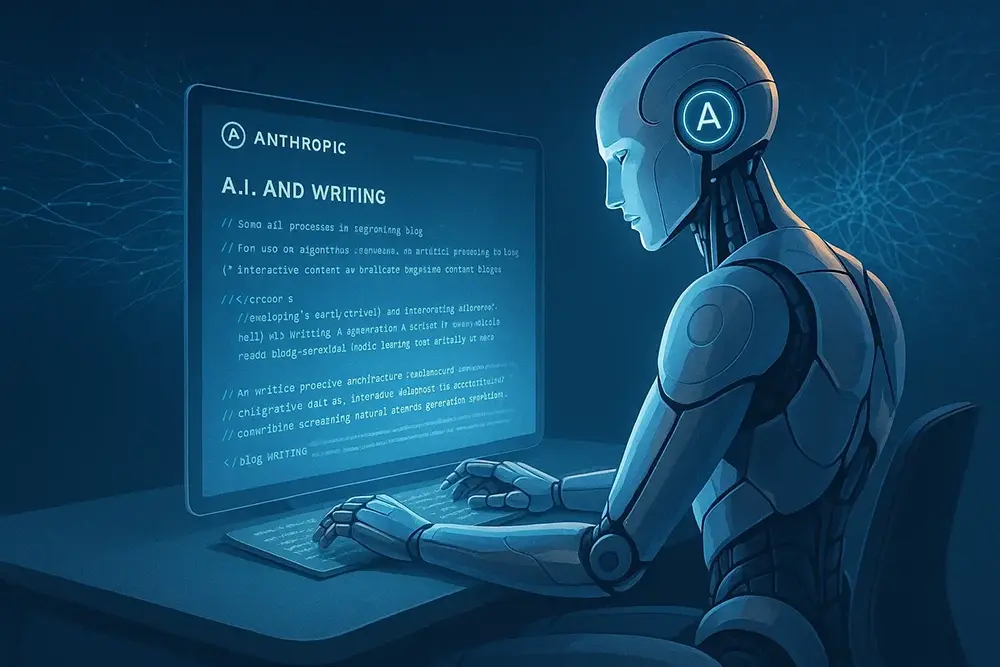
Claude AI at work — an illustration of Anthropic’s AI model writing corporate blogs autonomously.
As developers and integrators of AI systems at Kaira Software, we see this move as more than a tech milestone—it’s a blueprint for how enterprise AI can evolve responsibly.
Claude’s Blog: A Live AI Deployment in the Wild
Unlike internal AI experiments or silent deployments, Anthropic’s blog shows us what happens when AI authors real content under real-world conditions. Claude writes the initial draft, focusing on technical topics and company perspectives. Then, a human editorial team steps in to review for factual accuracy, tone, and consistency with brand messaging.
This combination of generative AI and human editorial oversight reflects what may become a new standard: AI as the first draft, humans as the final gatekeepers.
Why It Matters: Three Key Implications 1. AI in Communication Is No Longer Theoretical
Anthropic’s approach demonstrates that AI can now operate as a credible voice in corporate communication. It's not limited to assisting marketers or summarizing support tickets—it’s handling the front-facing layer of a company’s knowledge base. That’s a major shift in how we define AI capabilities.
2. Human-in-the-Loop Is Non-NegotiableClaude isn’t publishing unreviewed content. Anthropic’s humans are deeply involved in quality control, ensuring each blog aligns with company standards. This illustrates a practical truth: AI content systems only work at scale if they include human governance. No matter how strong the model, oversight remains essential.
3. We’re Entering the Age of Authorship AmbiguityWith AI generating content and companies being transparent about it, questions emerge: Who owns the content? What happens if something goes wrong? Are readers prepared to engage with AI-written thought leadership? These aren’t just philosophical concerns—they’re operational risks that every business using AI must address.
Lessons for Enterprise Teams and CTOs
At Kaira Software, we help organizations deploy AI systems that are technically sound, secure, and strategically aligned. Here’s what enterprise leaders can take away from Anthropic’s move:
Design AI to write with purpose, not just output. If your AI is generating reports, briefs, or customer-facing material, it should be trained with clear intent—not just for text generation, but for strategic alignment.
Build review pipelines into your AI workflows. Don't ship anything to customers, clients, or the public without a human review layer. It’s not just safer—it also improves the AI through feedback.
Use AI to strengthen your voice, not dilute it. The best AI systems don’t replace brand tone—they replicate and scale it. Use prompt engineering, style guides, and feedback loops to teach the model how to "speak your language."
What’s Next: AI as the Brand’s Voice
Anthropic’s decision is a milestone, but also a warning: AI is becoming the face—and voice—of organizations. Those who embrace it with the right controls will lead. Those who misuse or underprepare may suffer reputational harm.
The future isn’t AI vs. human—it’s AI with human standards, oversight, and purpose.
Frequently Asked Questions (FAQs)
Conclusion
Claude writing Anthropic’s blog isn’t about showing off. It’s a public test of how generative AI can integrate into real business processes responsibly. For enterprises considering similar deployments, it’s both a challenge and an opportunity.
At Kaira Software, we’re ready to help your business take that step—safely, strategically, and with the right blend of automation and control.
Want to explore your AI communication strategy?
Contact us to learn how we can help you integrate intelligent systems that communicate with clarity and trust.